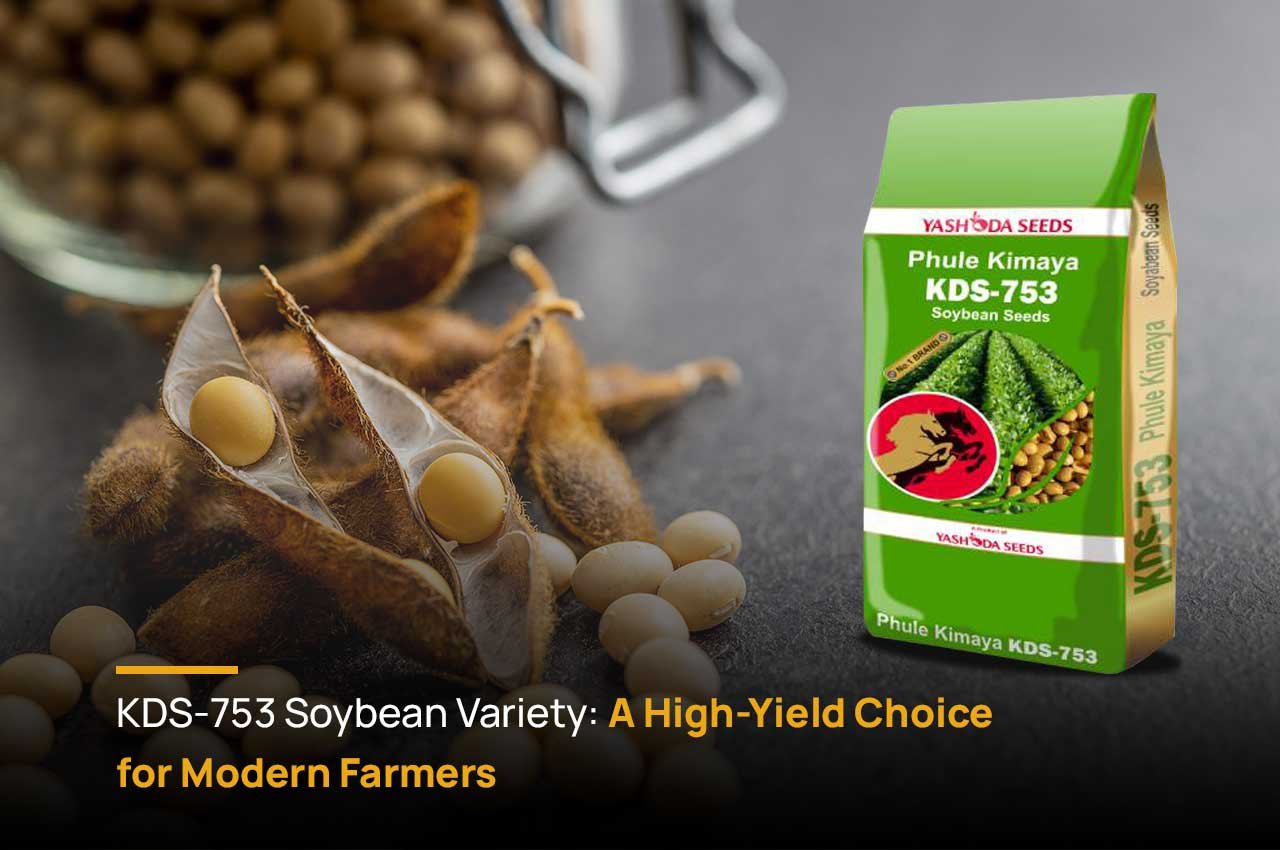
Due to its high market demand, oil content, and profitability, soybean has become one of the most important cash crops for Indian farmers. Choosing the right variety is a key factor in achieving better yields and reducing crop losses. Today, many varieties are available in the market, but KDS-753 has emerged as a preferred variety for farmers who are looking for higher productivity, disease tolerance, and shorter crop duration.
KDS-753 is also known as Phule Kimaya. It is a high-yielding soybean variety designed to suit the demands of modern agriculture. With excellent field performance, tolerance to major diseases, and outstanding yield potential, it provides farmers with a reliable option to maximise returns during the soybean growing season.
Which Season is Best for KDS-753 Soybean Cultivation?
KDS-753 soybean seeds are best cultivated during the Kharif season. Soybean is mainly cultivated during the monsoon months when sufficient rainfall and favourable temperatures help the plants grow well and develop pods.
Sowing generally takes place during June and July, depending on the arrival of monsoon rains in the region. Timely sowing helps the crop utilise available moisture efficiently and ensures better flowering and grain formation.
KDS-753 (Phule Kimaya) has shown good performance under Kharif conditions due to its adaptability and vigorous growth. The variety has a semi-determinate growth habit, attractive violet flowers, and is adapted to a wide range of soybean-growing regions.
Farmers should prepare the land properly and ensure adequate soil moisture before sowing. The full yield potential of the variety is best achieved in well-drained soils with high organic matter content.
Some of the advantages of KDS-753 cultivation during the Kharif season are:
- Efficient utilisation of monsoon rainfall
- Strong vegetative growth and pod formation
- Better tolerance to environmental stress
- Improved crop productivity
- Reduced risk of moisture stress during critical growth stages
With proper agronomic practices, this variety delivers consistent yields and enhanced profitability for farmers.
What is the Recommended Seed Rate for KDS-753 Soybean?
The correct seed rate is an important factor influencing soybean yield. An optimum plant population helps ensure proper sunlight penetration, nutrient uptake, and airflow within the crop canopy. The recommended seed rate for KDS-753 soybean seeds is 25–30 kilos per acre.
Using the recommended seed rate helps achieve a uniform crop stand and reduces competition among plants. It also allows the crop to utilise available resources more efficiently without overcrowding.
Before sowing, farmers should select high-quality certified soybean seeds with good germination and purity standards. KDS-753 (Phule Kimaya) provides nearly 98% seed purity, resulting in uniform crop establishment and better field performance.
For best results, farmers should:
- Use healthy and certified seed material
- Maintain proper row and plant spacing
- Ensure adequate soil moisture during sowing
- Treat seeds as per local agricultural recommendations
- Follow balanced nutrient management practices
What is the Duration of KDS-753 Soybean Crop?
One of the main advantages of KDS-753 soybean seeds is their short crop duration. The variety is ready for harvest in approximately 98–100 days, making it an excellent choice for farmers seeking faster harvests and efficient cropping schedules.
This shorter crop duration offers several advantages:
- Early Harvest: The crop matures in about 100 days, allowing farmers to harvest earlier than some longer-duration varieties. This helps reduce exposure to late-season weather-related risks.
- Improved Cropping Flexibility: The shorter maturity period helps farmers plan subsequent crops more efficiently. It provides an opportunity for the timely sowing of Rabi crops after soybean harvest.
- Reduced Production Risks: A shorter crop cycle means less exposure to pests, diseases, and adverse climatic conditions that may occur later in the season.
Final Thoughts
KDS-753, popularly known as Phule Kimaya, is an excellent choice for farmers looking for a reliable, productive, and disease-tolerant soybean variety. It is suitable for modern agricultural practices due to its high yield potential of 30–35 quintals per hectare, tolerance to YMV, short duration of 98–100 days, and recommended seed rate of 25–30 kg per hectare.
With proper crop management during the Kharif season, KDS-753 soybean seeds can help farmers achieve healthier crops, improved field productivity, and better profitability. Yashoda Hybrid Seeds offers high-quality soybean seeds that help farmers achieve better crop performance and improved agricultural outcomes.
FAQs
Q. How many grains does KDS-753 produce per pod?
Answer: The variety typically develops 2–3 grains per pod, contributing to higher overall productivity.
Q. Is KDS-753 resistant to diseases?
Answer: Yes, KDS-753 is tolerant to Yellow Mosaic Virus (YMV) and offers better protection against major diseases and pests.
Q. What is the seed quality of KDS-753 soybean?
Answer: KDS-753 features medium-sized seeds with 98% purity and a 100-seed weight of around 22–24 grams.
Q. Why should farmers choose KDS-753 Soybean seeds?
Answer: Its combination of high yield, disease tolerance, short maturity period, and strong field performance makes it a reliable choice.
Q. Is KDS-753 suitable for commercial soybean farming?
Answer: Yes, its high yield potential and disease tolerance make it an excellent choice for large-scale commercial cultivation.
Q. What soil type is best for KDS-753 soybean cultivation?
Answer: Well-drained loamy to medium black soils with good fertility are ideal for achieving the best results.
 Blog
Blog
 login
login
 Cart
Cart 

 Field Crop
 Bengal Gram Seeds Hybrid Bajra Seeds Hybrid Cotton Seeds Hybrid Jowar Seeds Hybrid Maize Seeds Hybrid Paddy Seeds Notified Paddy Seeds Research Black Gram Seeds Research Green Seeds Research Paddy Seeds Research Tur Seeds Research Wheat Seeds Paddy Seeds Groundnut Seeds Notified Soybean Seeds Research Cowpea Seeds Research Soybean Seeds